

Mostly Turns Out
Improvised recipes and learning to let go in a new country

A wine shop in Madrid the day before Christmas Eve isn’t for the faint of heart. Bottles are overpicked, leaving mostly the ones that are overpriced or so cheap they’re not worth buying, and the narrow aisles are packed shoulder to shoulder.
Dear god, I muttered under my breath when I saw the number of people trying to navigate aisles lined with glass bottles.
Emma took one look inside. “Nope. I’ll wait here,” she said, sitting down on a bench just outside the door.
There are few things worthy of putting myself in such a situation, but good wine for Christmas dinner is one of them. I wasn’t about to risk a cheap supermarket bottle on a holiday. I wasn’t sure the meals I had planned would turn out, but at least I knew the wine would be good. With that sort of resolve, I went in.
I held my bag as close to my body as I could, though it was impossible not to be in everyone’s way. I grabbed two bottles from an endcap, hoping to make a quick escape. Then I noticed the line. It snaked down an entire aisle and wrapped around the back of the store.
This is usually when I assess how badly I want what’s in my hands. Most of the time, I put it back. This time I stayed. The Spanish women in front of me and behind me exchanged quiet mutterings with me and each other, a shared disbelief and resignation.
Then came the crash.
A man further up in line dropped his basket, and every bottle inside shattered. The sound cut through the shop and briefly brought everything to a halt. Glass scattered across the floor; wine mixed with stronger liquors. The smell was pungent and wrong. The man stood there, composed but unsure, as if waiting for instruction.
The line ahead of him shortened. Those of us behind hesitated, unwilling to walk through the mess until new customers–unaware of the queue–began slipping in.
That’s when everyone moved.
“Estamos aqui,” a woman shouted, tiptoeing through the puddle of alcohol to reclaim her rightful place. We followed her lead, stepping carefully, adjusting, carrying on.
Buying wine might sound like the main event of the day, but it was only the warm-up. The real test came in the grocery stores–three of them–where I hunted down ingredients for Christmas dinner.
This year, my kids and I are celebrating Christmas in Madrid, where my daughter lives. We invited her friends from Romania, who are spending their first Christmas away from family, to join us. I decided on a pasta that is always a favorite and is one I know how to make. This felt important, given that I’m not as gifted in the kitchen as I’d like to be.
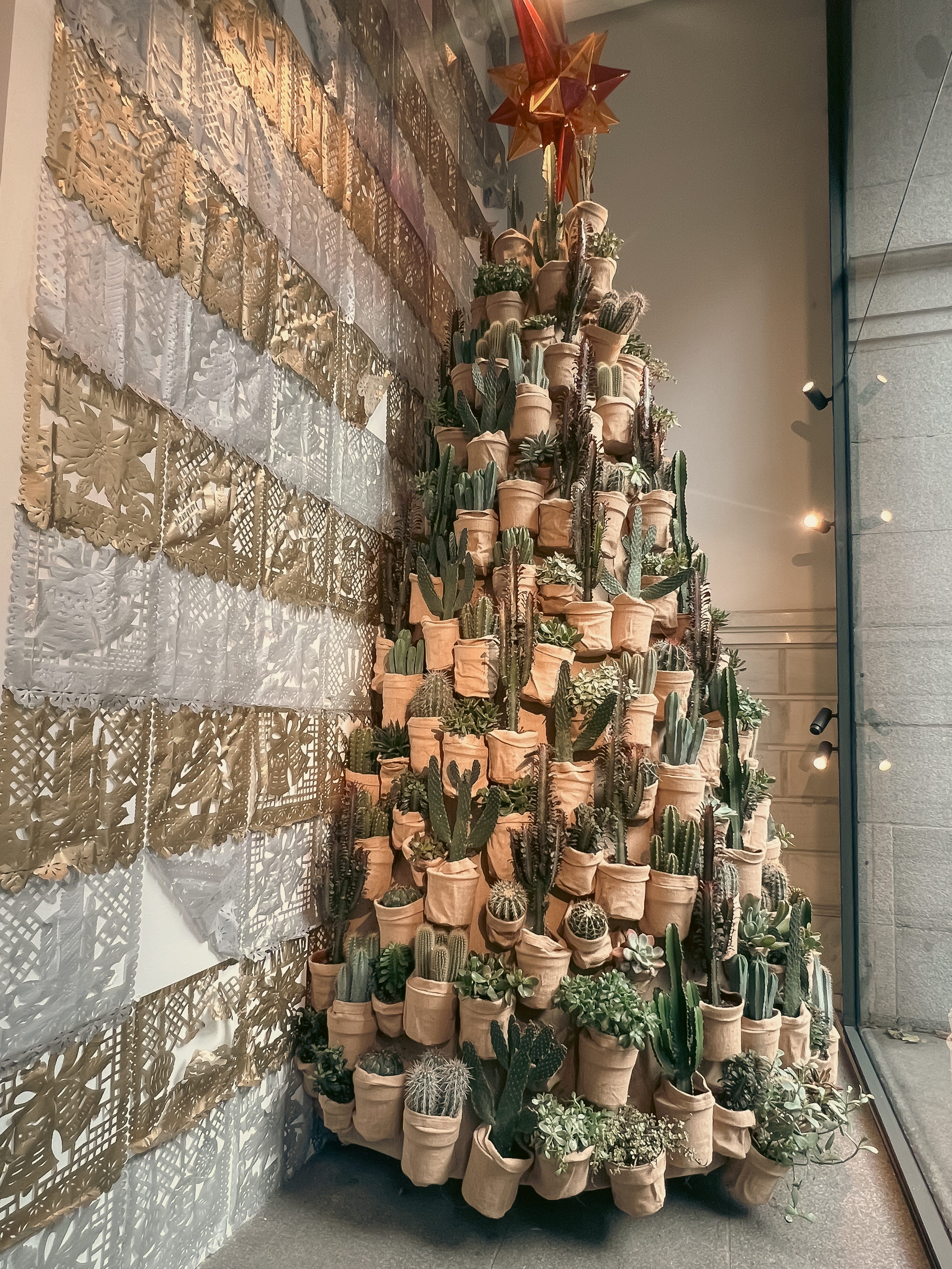
I wrote my list on a slip of paper, all the measurements carefully converted. In the meat aisle, I searched for something resembling Italian sausage. Instead, I found chorizo, salchichón, and longaniza–endless variations of things that weren’t quite right.
So I Googled: What kind of sausage can I use in place of Italian sausage in Spain?
Longaniza, it suggested. Add fennel.
Then the spice aisle. Google: What is the Spanish word for fennel?
Hinojo.
Nothing on the shelf.
Okay, I’ll improvise.
Plum tomatoes instead of crushed ones.
Spinach instead of arugula.
As I lugged the groceries back to the apartment, I hoped that the meal would turn out, and that I’d have the pots and pans needed in my sublet to even make it at all. I thought back to Alex who offered to make a traditional Romanian cake, noting that they mostly turn out.
That felt right. Some things mostly turn out. You adjust, substitute, step carefully around what’s fragile, and keep going. In a new country, that might be the closest thing to certainty.
I agree with Brandon, pics, por favor!
You HAVE to share pics and thoughts after you whip up the pasta!